Bosch puts its first hydrogen truck into service in plant traffic
9 October 20254 min read
Bosch puts its first hydrogen truck into service in plant trafficFuel-cell system manufactured in-house now in real operation
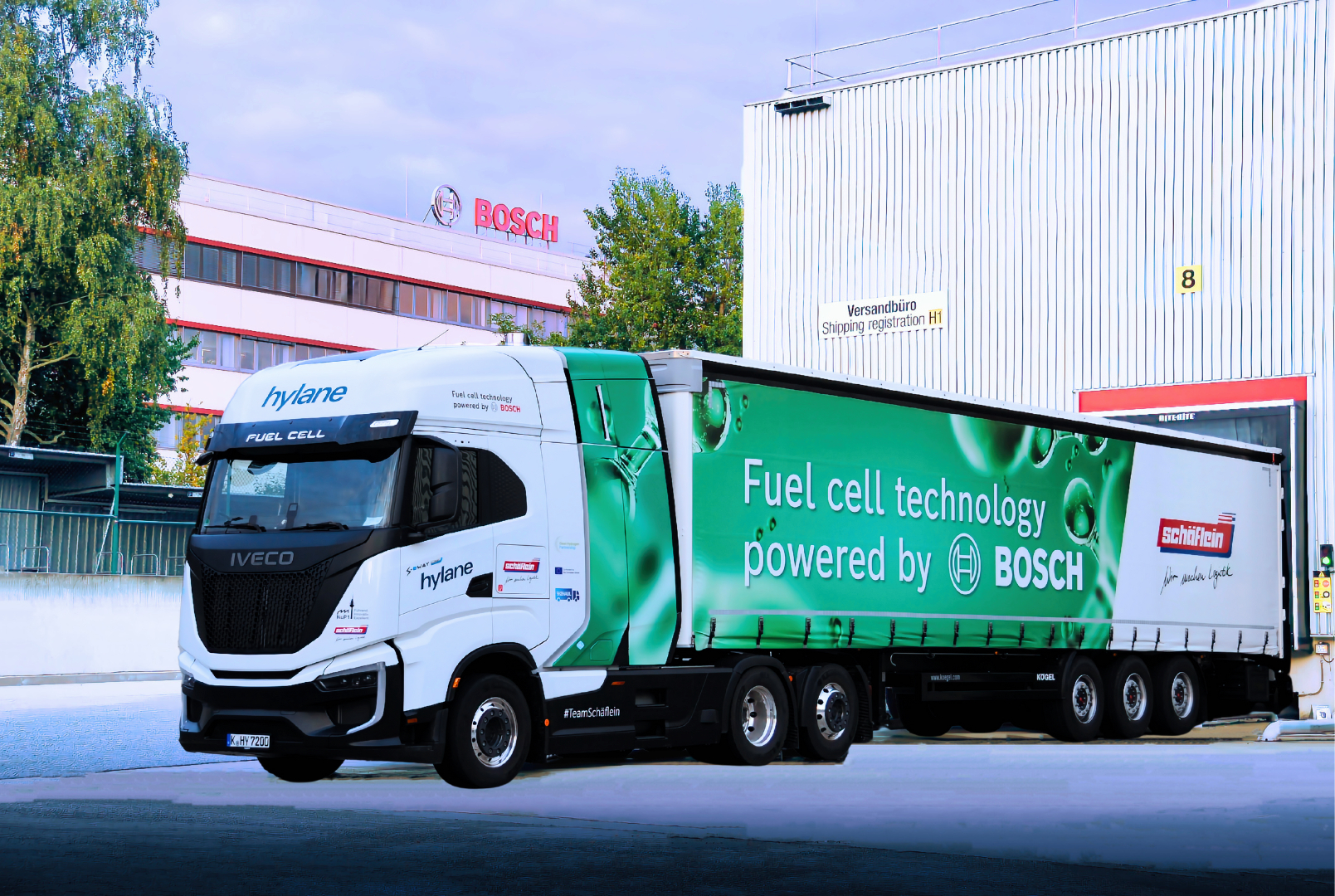
Bosch begins real operation of a fuel-cell truck for the first time at its Nuremberg plant.
Manufactured by Bosch, the truck’s fuel-cell system enables climate-friendly goods transportation between plant and service provider.
Data from real operation will support further development work.
Its Nuremberg plant recently started using a fuel-cell electric truck in plant traffic. The truck is equipped with the Bosch fuel-cell power module (FCPM), which was recently nominated for the prestigious German President’s Future Prize. “When we decided to make our plant traffic more climate-friendly, it was clear that we wanted a truck featuring Bosch’s FCPM,” explains Alexander Weichsel, the commercial plant manager in Nuremberg. “This deployment is an important building block that helps us reduce our emissions in logistics. The fact that several thousand trucks with Bosch fuel-cell systems are already on the road worldwide shows that the concept is proving its worth.” By converting hydrogen and oxygen into water and electricity, the 40-ton truck can be operated completely electrically. Using renewable hydrogen even makes the truck’s powertrain climate neutral. By switching to the new vehicle, Bosch also wants to set an example in Nuremberg and play an active role in developing a hydrogen value chain in line with the state of Bavaria’s Hydrogen Strategy 2.0. The goal is to reduce emissions and to collect dataThe FCPM Truck primarily transports products from the plant
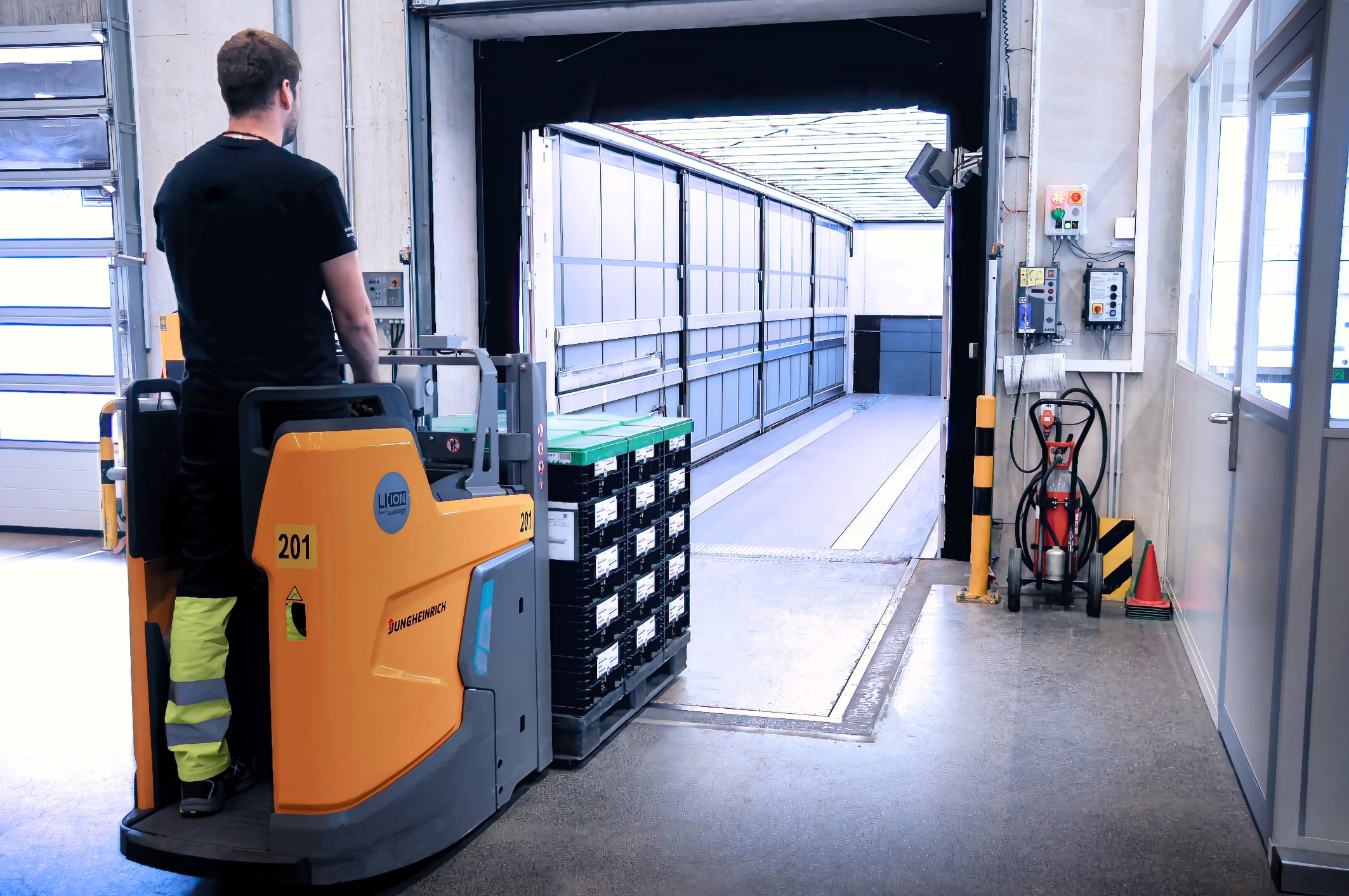
The vehicle primarily transports products from the plant’s own manufacturing operations and is expected to cover 12,000 kilometers per year.
Real operation provides valuable data for further development
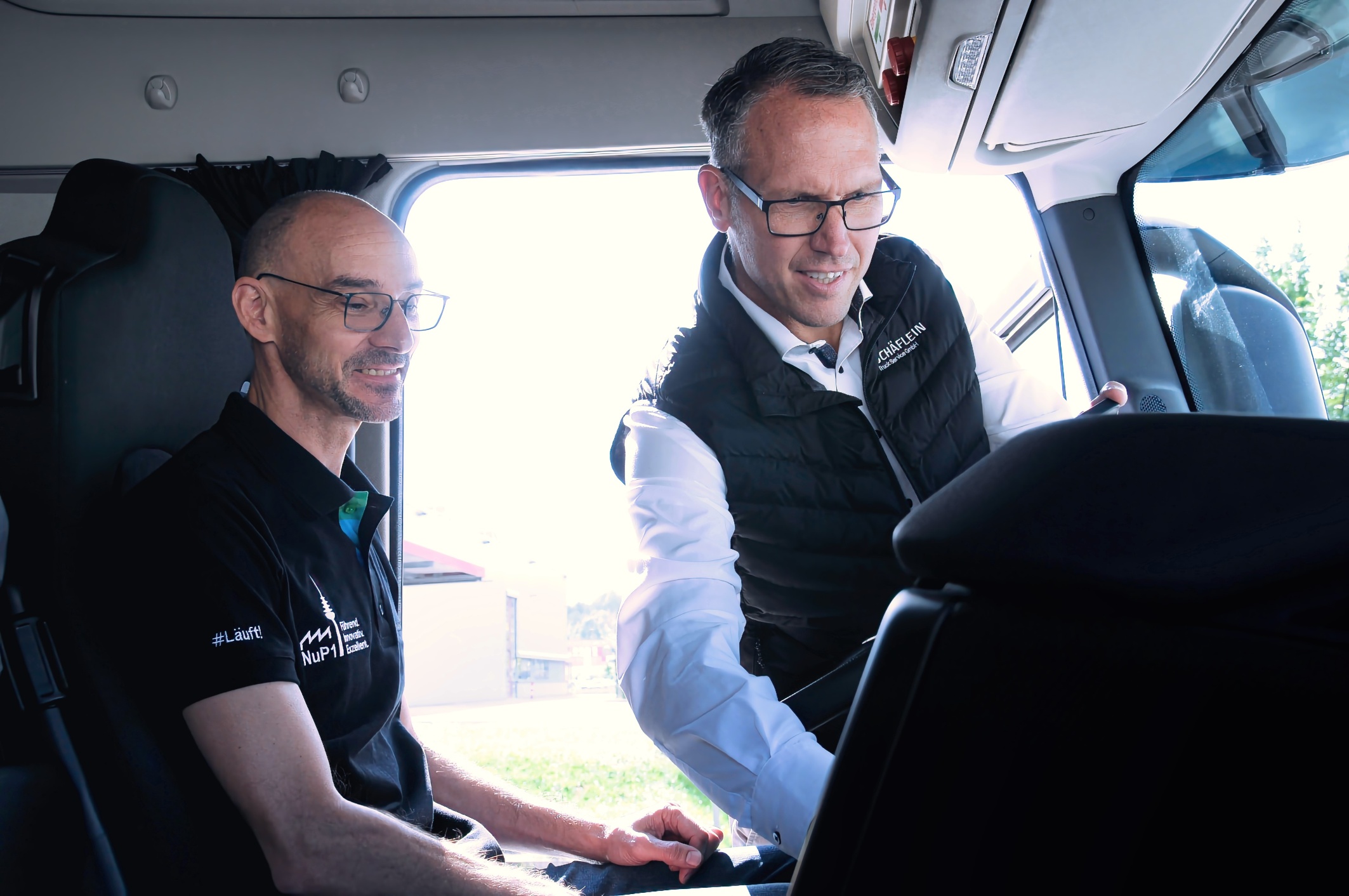
The Iveco truck in question has a range of up to 800 kilometers. It is operated by the freight forwarder Schäflein on behalf of the Bosch plant. Schäflein in turn rents the vehicle from the rental provider Hylane, which specializes in emissions-free trucks. The vehicle, which primarily transports products from the plant’s own manufacturing operations, is expected to cover 12,000 kilometers per year. As a result, the Nuremberg plant will reduce Bosch’s CO2 emissions – because the vehicle runs on hydrogen instead of diesel. Alongside this reduction of emissions in logistics, however, the primary reason for putting the truck into service is initially to gather experience and as much data as possible. This will flow into the further development of future powertrain systems such as the Compact 190 and Compact 300 models. Plant manager Weichsel is optimistic about the future: “The fact we’ve had no problems operating this truck shows that the fuel cell is ready for volume production.” At the same time, he says: “The key to a successful hydrogen economy is above all to ensure an abundance of affordable hydrogen and put in place an adequate H2 infrastructure, including in Nuremberg. We’re actively working with industrial partners in the Nuremberg metropolitan region to implement Bavaria’s hydrogen strategy.”
With the Iveco FCPM truck, Bosch has now put its own system into real operation in Europe for the first time. The truck’s five hydrogen tanks hold up to 70 kilograms at a pressure of 700 bar. Its fuel-cell system delivers a total output of over 200 kilowatts. Its e-axle is powered by the fuel-cell system, while two battery packs installed centrally in the truck serve as energy storage. The truck has a system output of 400 kilowatts and a gross weight rating of up to 44 metric tons. In addition to its robustness and long range – which, unlike battery-electric vehicles, is not affected by the outside temperature – the truck offers impressively short refueling times, which are similar to those of a diesel truck. Large-scale production of the FCPM started in Stuttgart-Feuerbach in mid-2023. The Bosch plant in Bamberg supplies the fuel-cell stack, while the Homburg plant supplies other components such as the electric air compressor and the recirculation blower.
Bosch has been strongly committed to building an H2 economy for a long time, and is developing technical solutions for the production, infrastructure, and use of hydrogen. This spring, the company heralded its market entry with technology for electrolyzers and presented its Hybrion PEM electrolysis stacks. When it comes to hydrogen applications, Bosch is active not only in the field of mobile fuel cells but also in hydrogen engines.