
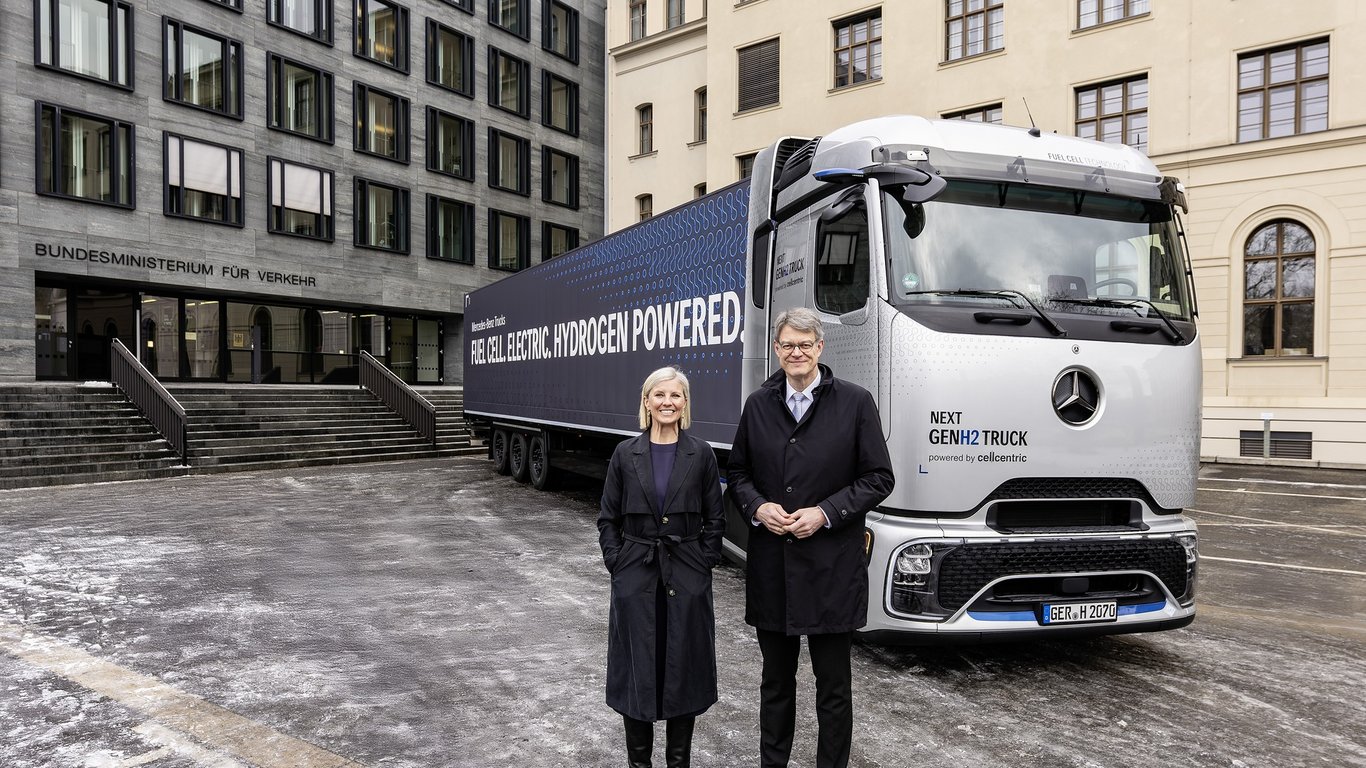
Trucks and buses keep Germany and Europe moving – they are the backbone of logistics and passenger transport. Daimler Truck therefore emphasizes the importance of the commercial vehicle industry in achieving climate targets as well as the necessity of a coordinated market ramp-up of green drive technologies. This requires a regulatory framework that links CO₂ targets with the expansion of charging and hydrogen infrastructure. Accelerated political measures are needed to ensure that customers can operate new vehicles as economically as conventional models. A good example is the extension of the toll exemption for zero-emission trucks in Germany until mid-2031. This now provides companies with planning certainty and makes the switch to zero-emission trucks attractive. What is now important is implementation across Europe. In addition, decarbonization must be driven forward as quickly as possible through an efficient combination of battery-electric and hydrogen-‑based technologies to safeguard Europe’s competitiveness.
When it comes to fuel cell and hydrogen technologies, Germany and Europe are at strategically significant crossroads. A well-established fuel cell industry with numerous small and medium‑-‑sized suppliers forms the basis for technological leadership, reduces dependency on Asian suppliers, and strengthens European value creation. In the field of electrolysis, Europe is also in a leading position with relevant large-scale projects and several major hydrogen companies based here. Germany is also one of the key locations in the emerging field of liquefaction technology. This presents a historic opportunity: new markets can be opened up across the entire value chain, jobs can be created, and geopolitical risks can be reduced. The prerequisite is a clear political framework that enables investment and provides planning and market certainty—ensuring Europe retains its competitive edge.